

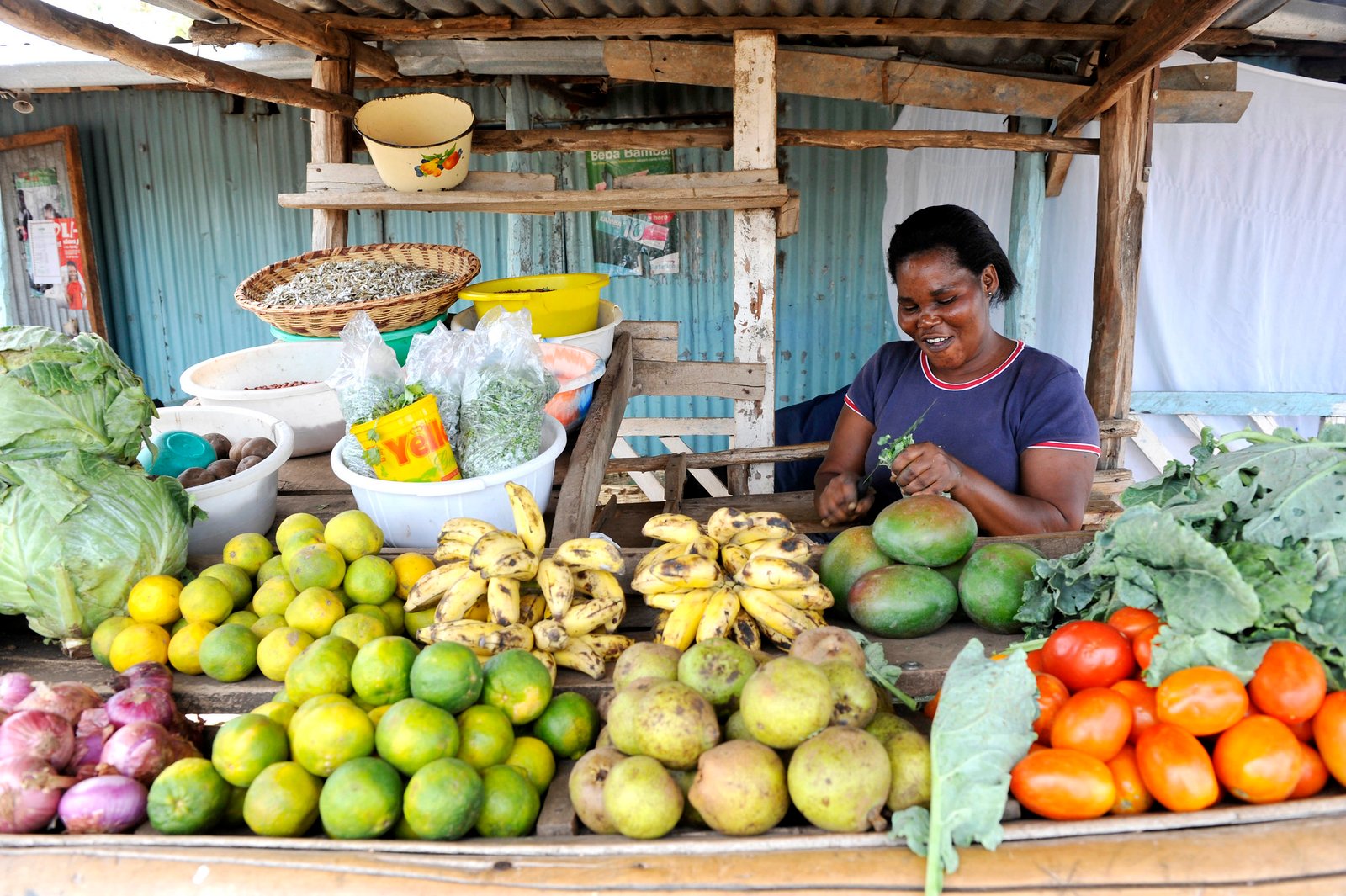
Across Africa and other emerging markets, the informal economy powers livelihoods, innovation, and resilience yet remains undervalued by policymakers and ignored by investors who fail to see its true scale and potential.
In most developing countries, the informal economy is not a peripheral part of the system, it is the system. It accounts for the majority of employment, the majority of domestic trade, and a substantial share of GDP. Yet despite its significance, it remains one of the most misunderstood and overlooked forces in the global economic landscape.
To ignore the informal economy is to misread the present and miscalculate the future. It is to underestimate the actual drivers of consumption, labour, and innovation in some of the world’s fastest-growing markets.
The informal economy refers to economic activity that takes place outside the scope of government regulation, taxation or legal protection. It includes everyone from street vendors and roadside mechanics to smallholder farmers, market traders, informal transport operators, freelance artisans, domestic workers, and unregistered online resellers. According to the International Labour Organization (ILO) more than 2 billion people—61 per cent of the global workforce—operate within the informal sector.
In sub-Saharan Africa, that number climbs even higher, with over 85 per cent of total employment occurring informally. Across Latin America, Asia, and the Middle East, the story is much the same.
These statistics, however, are just the beginning. Informality isn’t only about survivalist jobs or cash-in-hand work. It is about dynamic micro-markets, social trust networks, rapid adaptation, and untapped demand.
While many formal institutions collapsed or stalled during the COVID-19 pandemic, the informal economy showed resilience. In Lagos, for instance, informal food vendors shifted quickly to home delivery long before supermarket chains could retool their operations.
Informal traders and mobile money agents became lifelines in peri-urban and rural communities. According to the GSMA’s Mobile Money Report over 70 per cent of global mobile money transactions now occur in sub-Saharan Africa.
In cities like Nairobi and Accra, informal transportation systems such as boda-bodas and tro-tros move more people daily than government-run transit. These are not just economic stopgaps, they are functioning ecosystems with deep market intelligence, customer loyalty, and adaptive pricing models.
So why is the informal economy still treated as invisible or undesirable?
Part of the problem is a legacy of colonial and post-colonial economic models that equated informality with illegitimacy. Governments often see informal businesses as non-compliant, untaxable and untrackable. This leads to harsh crackdowns, relocations, or zoning policies that penalise activity rather than enabling it.
But this approach is short-sighted. The World Bank estimates that the informal sector contributes over 35 per cent of GDP in low- and middle-income countries.
Forward-thinking governments are beginning to realise this. In Rwanda’s e-taxation system has made it easier for informal traders to register, report income, and access government incentives.
Meanwhile, cities like Bogotá and Accra are rethinking their planning models to integrate street vendors and informal transit systems into urban design, recognising their economic contributions rather than treating them as nuisances.
Investors and corporations often avoid informal markets due to perceived risks: lack of credit history, no legal contracts, inconsistent supply chains. But those who have embraced informality on its own terms are winning big.Companies like M-KOPA and Wasoko have built thriving businesses by designing financial and logistics services specifically for informal retailers.
Similarly, telecom companies across Africa have turned to mobile airtime vendors, many of them informal as core parts of their distribution and agent networks. In doing so, they’ve built trust, reach and brand loyalty at a grassroots level.
Beyond profits and impact, there is another reason to engage the informal economy: data.
Because informal businesses operate off the grid, traditional data sets miss them entirely. But fintech and platform-based companies that serve informal workers can gather rich insights into consumer behaviour, demand trends, creditworthiness, and product preferences.
Startups like Tulaa in Kenya and Lynk have shown how digital platforms can formalise aspects of informal work
In short, informality is not the absence of systems. It is the presence of alternative systems, systems that businesses can plug into if they are willing to listen, learn and localise.
For governments, ignoring the informal economy is a revenue leak, a policy blind spot, and a missed development lever. For businesses, it is a massive untapped market with agile distribution networks, unmet needs and adaptable talent.
Rather than trying to force formalisation from the top down, stakeholders should focus on building trust, reducing friction, and co-creating tools that allow informal earners to grow. That means payment systems without paperwork, regulations with incentives, and infrastructure designed around actual behaviour, not bureaucratic ideals.
The informal economy is not a flaw in the global economic system. It is its most flexible, localised, and human-centred layer. It embodies ingenuity, risk-taking, and grit.
Ignoring it is no longer an oversight. It is an economic mistake. The future of growth in emerging markets lies not just in boardrooms and tech hubs, but in the hustle of the street vendor, the gig of the bike rider, and the network of the unregistered reseller.
