

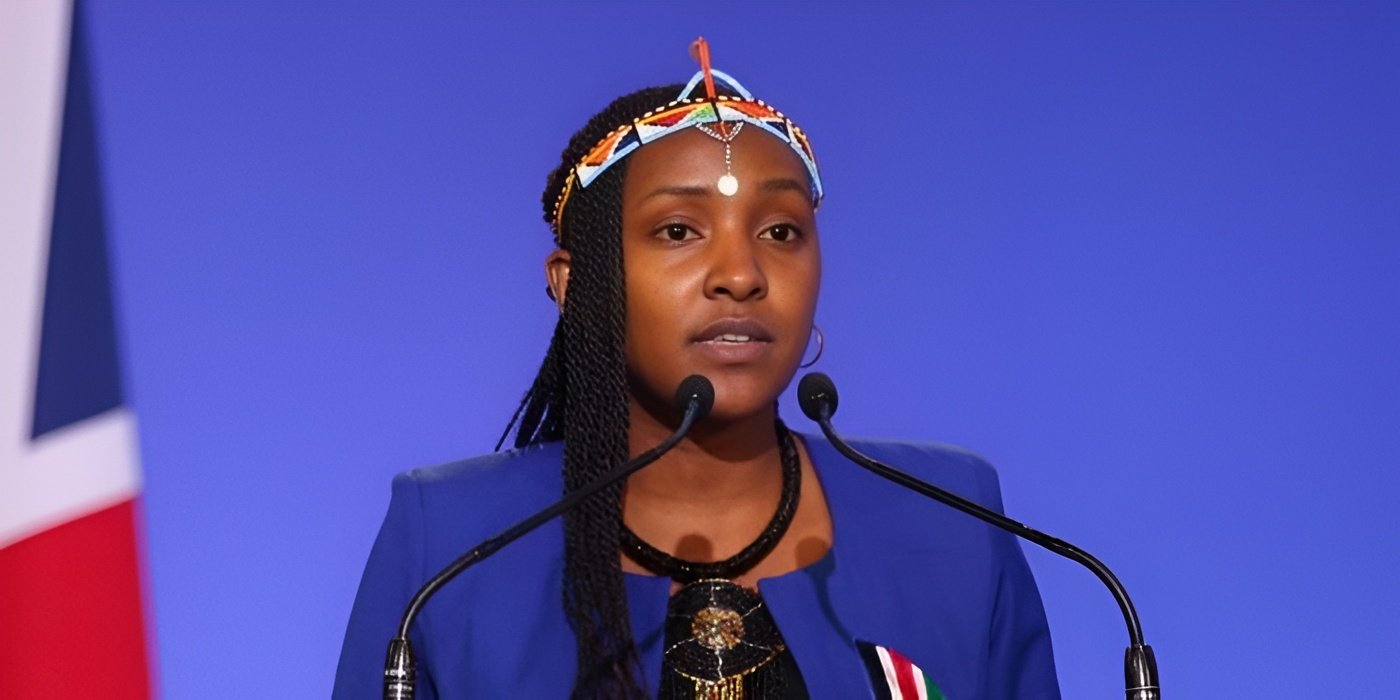
In early 2024, Wathuti made history as the youngest Commissioner appointed to the Global Commission on the Economics of Water (GCEW), where she aims to channel grassroots wisdom into global water policy and emphasise sustainable, equitable water access. As a representative for civil society and youth, she is also active in the Nairobi Rivers Commission and the youth engagement platform of the Africa Climate Summit (2023). For a leader who began her journey planting trees in rural Kenya, this global role is both a personal milestone and a continuation of the values that have shaped her life’s work.
Elizabeth Wathuti’s path to international influence began far from the conference halls and policy tables she now frequents. She grew up in Kiandu village, Nyeri County, an area renowned for its dense forests and clean streams. From an early age, she understood the link between healthy ecosystems and community wellbeing. At seven, she planted her first tree, an act that would quietly anchor her identity. In secondary school, she established an environmental club under the guidance of her geography teacher, organising tree planting and conservation activities that rallied her peers.
When she joined Kenyatta University to study Environmental Studies and Community Development, her activism gathered pace. She led the university’s Environmental Club, coordinating reforestation projects, clean-up exercises and climate awareness drives. Inspired by Nobel laureate Wangari Maathai, she came to believe that environmental stewardship had to start early — that children could grow up with a personal stake in protecting the planet if they were engaged from the start.
In 2016, she founded the Green Generation Initiative (GGI), a youth-led organisation committed to instilling environmental values in schools. Its work combines education with tangible action: planting fruit trees to provide nourishment, shade and a direct connection between students and the environment. The programme’s “adopt-a-tree” approach ensures that each sapling is cared for, turning tree planting from a ceremonial act into a lasting commitment. Since its inception, GGI has planted more than 30,000 seedlings across Kenya, transforming schoolyards into living classrooms.
Her leadership and vision have earned wide recognition. She received the Wangari Maathai Scholarship, was named Africa Green Person of the Year in 2019, and became a UN Young Champion of the Earth finalist for Africa. That same year, she was honoured with the Diana International Award and named among the 100 Most Influential Young Africans. These accolades opened doors to global platforms, but she remained rooted in grassroots engagement.
Wathuti’s defining international moment came at COP26 in Glasgow, where she addressed more than 100 heads of state. She spoke of the droughts that had devastated parts of Kenya, of the hunger and thirst endured by communities already living with the consequences of climate change. Her speech was a plea for urgency and justice, grounded in the belief that those least responsible for the crisis should not bear its harshest burdens. It was the kind of intervention that made her a sought-after voice in climate diplomacy.
In the years that followed, her influence only grew. In 2022, she was the only Kenyan included in the TIME100 Next list under the “Phenoms” category, and in 2023 she received the TIME100 Impact Award for her environmental leadership. She played a central role in coordinating the first African Youth Climate Assembly, ensuring young Africans had a platform to influence climate policy. She also helped develop a three-year strategy for the Wangari Maathai Youth Hub, focused on nurturing leadership and environmental stewardship.
Her appointment to the GCEW in 2024 was not just an endorsement of her expertise, but a recognition of the perspective she brings — one that connects high-level policy to the lived realities of communities on the ground. In her work with the Nairobi Rivers Commission, she is involved in efforts to restore water systems that sustain both human and ecological life. Through the Africa Climate Summit’s youth platform, she continues to advocate for inclusive decision-making that gives young people more than a symbolic seat at the table.
What distinguishes Wathuti is her ability to weave technical issues into compelling human narratives. She speaks of trees not only as tools for carbon sequestration but as sources of fruit for schoolchildren, shade for playgrounds, and symbols of resilience. She frames water not only as a resource to be managed but as a lifeline that shapes the dignity and survival of communities. This grounding in human experience has made her an effective bridge between grassroots realities and global policymaking.
With over 70 per cent of Africa’s population under 30, Wathuti believes the continent’s future depends on harnessing the energy, creativity and commitment of its youth. She often speaks of her ambition to one day lead the United Nations as Secretary-General, a position from which she believes she could drive meaningful global action on climate change and sustainability. Until then, she continues to work across scales — planting trees in Kenyan schools while advising on water governance at the highest international levels.
Elizabeth Wathuti’s journey demonstrates how a single seed — planted in a small village — can grow into a movement that reaches the world stage. From the forests of Nyeri to the global commissions shaping the future of water and climate policy, she has remained consistent in her belief that change begins with individual action and is sustained by collective responsibility. Her story is a reminder that leadership is not about titles or accolades, but about the courage to imagine and work towards a future where people and the planet thrive together.
