

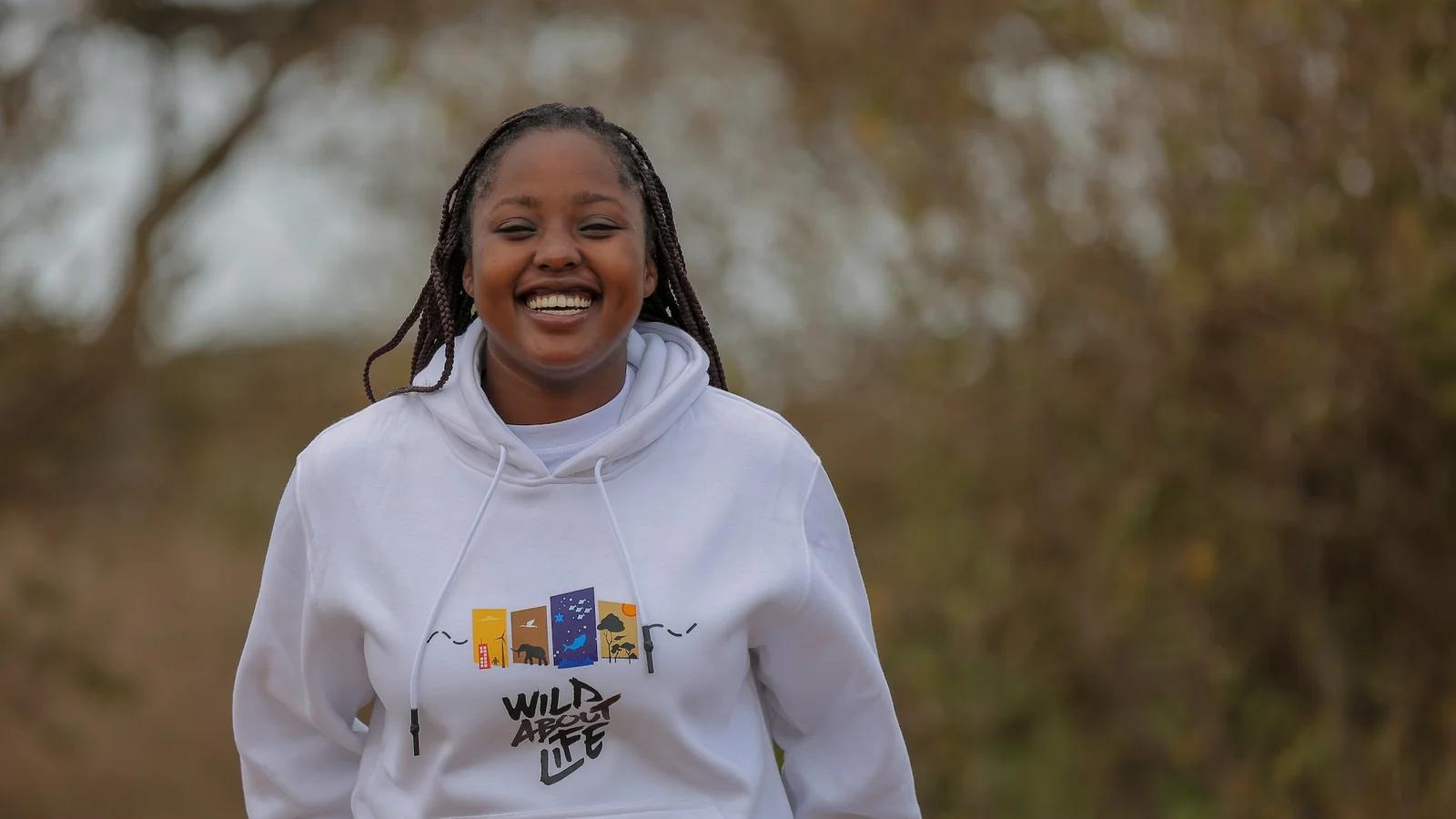
By the time Anita Soina turned 21, she had already become one of Kenya’s most visible climate activists. Now in her mid-twenties, she’s not just rallying for the environment, she’s reshaping how Africa’s youth, women, and indigenous communities are seen and heard in climate leadership spaces, from local councils to global summits.
Born into a Maasai pastoralist community in Kajiado County, Soina grew up in an environment where the impacts of climate change weren’t abstract, they were personal. Droughts weren’t statistics. They missed school days, lost livestock, and the disappearance of traditional ways of life. This early exposure to the fragile balance between people and nature seeded her passion for environmental advocacy.
In 2018, at just 18 years old, she founded The Spice Warriors, a youth-led environmental movement focused on afforestation, education, and simplifying climate issues for grassroots communities. The group has since planted thousands of trees, educated schools across Kenya, and helped shift the environmental conversation from boardrooms to classrooms and rural villages.
But for Soina, awareness was just the beginning.
In 2020, she launched The Soina Foundation, a broader initiative aimed at tackling issues interlinked with environmental degradation, menstrual hygiene, access to clean water, food security, and gender equity. The foundation works at the intersection of climate resilience and community wellbeing, with programs that bring sanitation solutions, period products, and youth education to under-resourced communities.
That same year, she authored The Green War, a memoir-meets-manifesto that blends her personal journey with a deep dive into climate politics and advocacy in the Global South. The book, widely read in African activist circles, doubled as a call-to-action for young people often sidelined in decision-making processes around climate justice.
From Climate Voice to Political Candidate
In a bold move that set her apart from many youth activists, Soina announced her candidacy for Member of Parliament in Kenya’s 2022 elections. Her campaign focused on integrating environmental action into legislative priorities, advocating for climate-responsive policies, and ensuring that underserved communities — particularly indigenous groups and youth — were included in the policymaking process. While she didn’t win the seat, her run was symbolic: it signaled a new kind of political leadership emerging across Africa — one that’s young, unapologetically activist, and deeply rooted in community realities.
A Summit Speech Framed by Crisis
In 2024, Soina attended the Green Vision Summit and Expo in Malta in her capacity as a global ambassador. At the time, her home country was facing one of the most devastating climate-related disasters in recent history. Heavy rainfall, intensified by El Niño conditions, led to widespread flooding across more than 30 counties in Kenya. Over 500,000 people were displaced, hundreds lost their lives, and thousands of schools and farms were destroyed.
During the summit, Soina publicly acknowledged the crisis unfolding back home, highlighting the urgency of climate adaptation and the unequal burden borne by communities in the Global South. Though not widely reported in global press, her remarks — documented in part through her own social media — were a poignant reminder that for many young leaders, the climate crisis is not a future threat; it’s a present emergency.
Her presence at GVSE brought visibility to a real-time disaster, positioning her not just as a delegate, but as a conduit between lived reality and international dialogue.
Global Platforms, Local Truths
In 2023, Soina was appointed Global Youth Champion for Sanitation and Water for All (SWA), a UN-hosted role. Through this platform, she has continued to elevate youth voices at international forums while staying grounded in the indigenous experiences that shaped her activism. She has spoken at major global events including the UN Water Conference, Stockholm+50, and several COP climate summits not as a symbolic youth presence, but as a data-informed, community-driven voice pushing for accountability and climate equity.
At a time when the global climate movement is grappling with issues of representation, inclusion, and intergenerational justice, Soina offers a compelling template for what the next era of leadership could look like: deeply local, proudly African, and boldly unapologetic.
As she expands The Soina Foundation’s footprint across East Africa and eyes a return to public office, one thing is clear — she is not waiting to be handed a seat at the table. She’s helping to rebuild it.
