

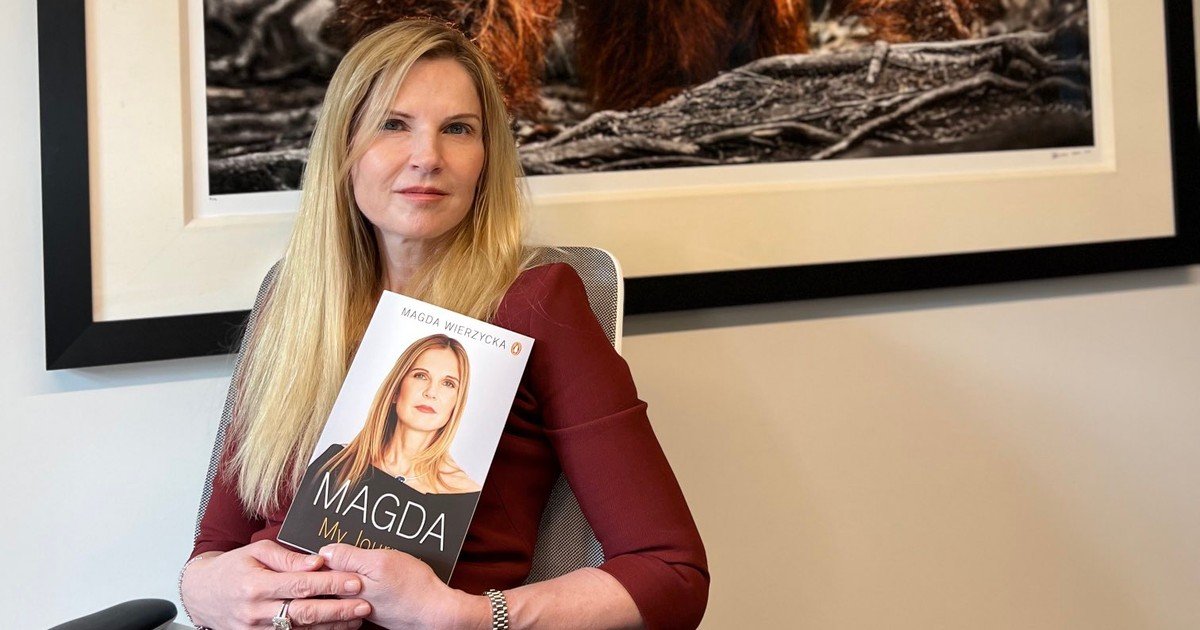
Magda Wierzycka, founder and chief executive of Sygnia, is launching a dedicated venture capital fund aimed at backing South African startups developing artificial intelligence technologies.
The move marks a strategic expansion beyond Sygnia’s traditional asset management operations and signals a deliberate attempt to position South Africa more competitively in the global AI economy.
Wierzycka, widely regarded as one of South Africa’s most prominent business leaders and among the country’s wealthiest self-made women, founded Sygnia in 2006. Over two decades, she has overseen the growth of the firm’s assets under management from approximately R2 billion to around R461 billion, transforming it into one of South Africa’s largest independent asset managers. The company, listed on the Johannesburg Stock Exchange, is valued at roughly R5.2 billion, with Wierzycka holding a controlling stake.
In its 2025 financial results, Sygnia reported profit after tax of R383.2 million, up 10.4% year on year — performance that provides balance sheet strength as it moves into venture investing.
Concern Over South Africa’s AI Future
Wierzycka recently attended the annual meeting of the World Economic Forum in Davos, where artificial intelligence dominated discussions among policymakers and corporate leaders.
She has since expressed concern that South Africa risks being left behind in what she describes as the rapid emergence of an “agentic economy” — one in which AI systems increasingly perform tasks traditionally done by humans.
“We’re building this agentic economy where effectively AI agents will take over running most of the tasks that we are used to performing ourselves,” she said.
Her concern is not about the inevitability of AI advancement, but about South Africa’s structural inability to capitalise on it. According to Wierzycka, without deliberate capital allocation into domestic innovation, the country risks exporting talent and importing finished AI systems built elsewhere.
“Unless someone takes deliberate action to support South Africa’s intellectual capital with money, then all we are doing is exporting our best software engineers,” she said. “We’ll end up importing the systems that will actually drive our economy going forward.”
Closing the Venture Capital Gap
Wierzycka argues that South Africa possesses world-class intellectual capital comparable to that found in the United Kingdom or the United States. The missing ingredient, she says, is structured risk capital.
Many promising local AI founders relocate abroad or secure offshore funding — often from US-based venture capital firms — which can result in intellectual property and strategic control shifting out of the country.
“They will put $500,000 into the company, and suddenly they have the company,” she noted, referring to early-stage offshore funding deals that may dilute local ownership.
Sygnia’s proposed fund aims to intervene at this early stage. The firm plans not only to provide seed capital but also to support founders with licensing guidance, regulatory frameworks, commercial structuring, and market positioning — areas where early-stage technology businesses often struggle.
The new fund is expected to be formally announced on 23 February 2026, with operations targeted to begin within six months once seed capital is secured. Sygnia intends to commit some of its own capital and is reportedly considering a structured national competition to identify high-potential AI founders.
A Personal and Strategic Return to South Africa
In her December 2025 CEO report, Wierzycka confirmed that she had returned to South Africa after seven years as a tax resident of the United Kingdom. While tax changes in the UK influenced the move, she cited broader geopolitical and technological shifts as decisive factors.
“The world has become deeply polarised — not only due to shifting geopolitical forces but also because of the accelerating race for AI dominance,” she wrote.
“These seismic shifts in the global order force us to rethink where we can still make a meaningful difference.”
Her time in the UK, she said, highlighted a glaring weakness back home: the absence of a mature venture capital ecosystem capable of supporting innovation at scale, despite South Africa having one of the youngest populations globally.
Wierzycka has previously advocated for policy reform that would encourage retirement funds to allocate a portion of assets toward venture capital, arguing that innovation financing is critical for long-term economic competitiveness.
