

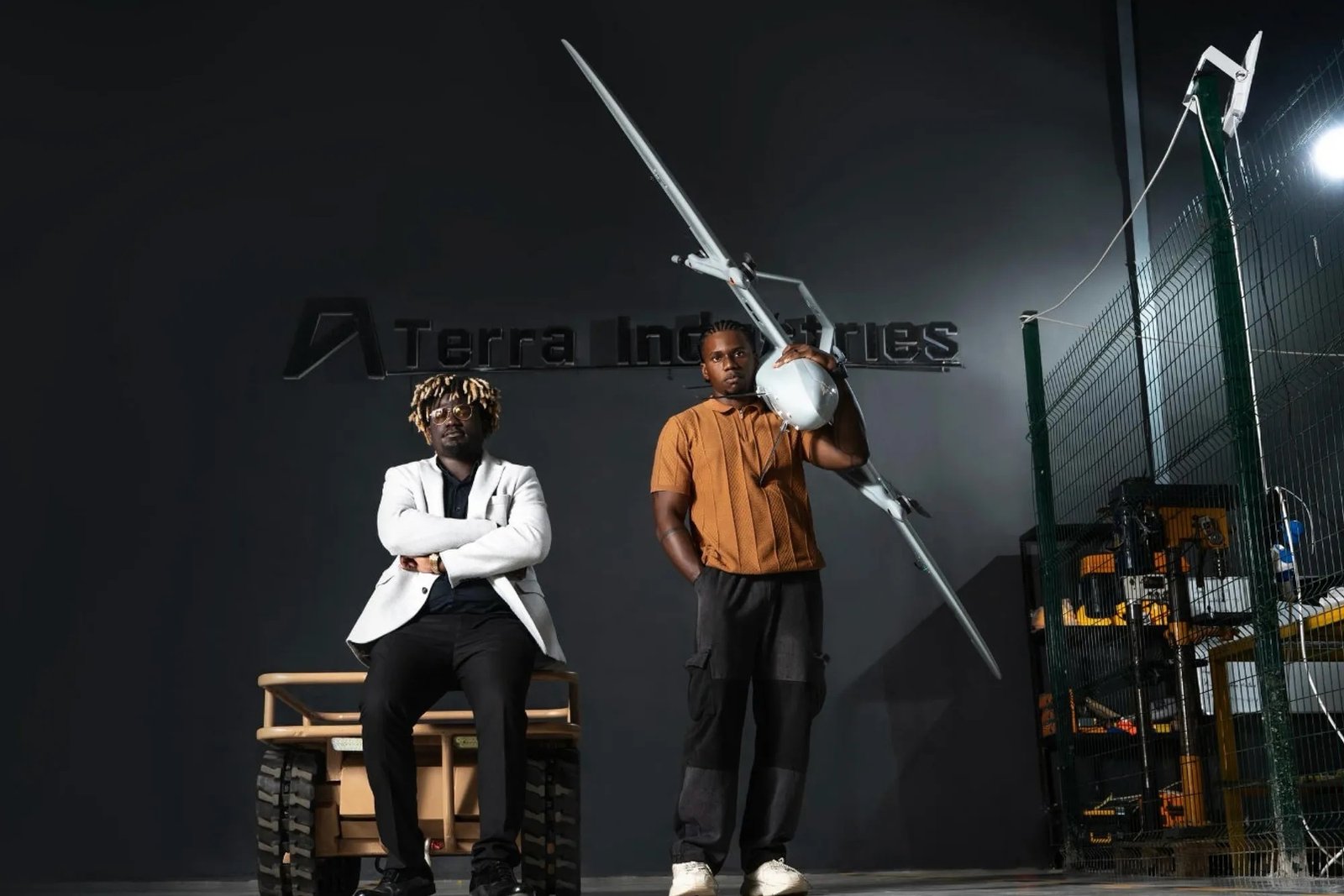
Nigeria has taken a decisive step toward defence self-sufficiency.
The Defence Industries Corporation of Nigeria (DICON) has signed a landmark joint-venture agreement with Terra Industries aimed at accelerating local defence manufacturing and reducing reliance on imported military technology.
The agreement formalises collaboration across manufacturing, technology transfer and supply-chain integration — positioning Nigeria to develop sovereign defence capabilities ranging from assembly lines to advanced systems designed and deployed domestically.
For Africa’s largest economy, the move signals more than industrial ambition. It reflects a strategic recalibration in a region where defence procurement has historically depended on foreign suppliers.
From Import Dependence to Industrial Sovereignty
Nigeria, like many African nations, has long relied on external defence contractors for hardware, maintenance systems and advanced military technologies. That dependency exposes governments to supply-chain disruptions, foreign policy constraints and escalating costs.
DICON’s Director-General, Major General B.I. Alaya, described the agreement as a “transformational step” toward building a regional hub for advanced innovation while lessening import dependence.
The joint venture aims to do more than assemble imported components. According to officials familiar with the structure, Terra will provide manufacturing know-how, system design capabilities and access to global supply chains, embedding expertise locally rather than exporting production abroad.
In practice, that could mean expanded domestic production facilities, specialised workforce training and the gradual development of indigenous intellectual property in defence systems.
The long-term objective is clear: sovereignty through capability.
Terra’s Rapid Rise — And Global Backing
The partnership comes at a pivotal moment for Terra.
In January 2026, the startup raised $11.75 million in seed funding led by 8VC, the venture firm founded by Joe Lonsdale, co-founder of Palantir Technologies.
Just weeks later, Terra secured an additional $22 million led by Lux Capital, bringing total funding to $34 million — positioning it among Africa’s most capitalised early-stage defence startups.
The speed and scale of Terra’s funding round drew attention, particularly given the sensitive nature of defence technology and the company’s Silicon Valley investor base.
The DICON agreement appears to address that scrutiny directly.
Balancing Foreign Capital With Local Credibility
Foreign investment in African defence startups is not without controversy. Critics often question whether strategic technologies funded abroad can truly serve national interests without external influence.
By formalising a joint venture with DICON, Terra is anchoring its operations within Nigeria’s institutional defence framework. The structure provides state oversight, local manufacturing commitments and strategic alignment with national priorities.
For Terra, the partnership enhances legitimacy.
For Nigeria, it provides access to capital-backed innovation while maintaining sovereign control.
The model mirrors broader global trends in defence industrial policy, where governments increasingly prioritise domestic capacity while leveraging private-sector agility and venture capital funding.
Strategic Implications for Nigeria and the Region
If executed effectively, the DICON–Terra collaboration could reshape Nigeria’s defence industrial landscape.
Local production can reduce procurement costs over time, create high-skilled jobs and stimulate ancillary industries such as advanced materials, electronics and logistics. It may also position Nigeria as a regional supplier within West Africa, strengthening its geopolitical influence.
However, defence manufacturing is capital-intensive and technically demanding. Success will depend on sustained funding, regulatory clarity and effective technology transfer.
The partnership also arrives amid heightened security challenges across parts of West Africa, where governments are reassessing both operational readiness and industrial resilience.
A Broader Shift Toward African Defence Innovation
Across the continent, conversations around technological sovereignty are intensifying, not only in fintech and artificial intelligence, but increasingly in defence.
The DICON–Terra agreement reflects that shift.
It signals an ambition to move from procurement dependency to production capability, from importing solutions to building them.
Whether the joint venture becomes a blueprint for other African states will depend on execution. But the direction is unmistakable: defence, once dominated by foreign contractors, is gradually entering the domain of local innovation.
