

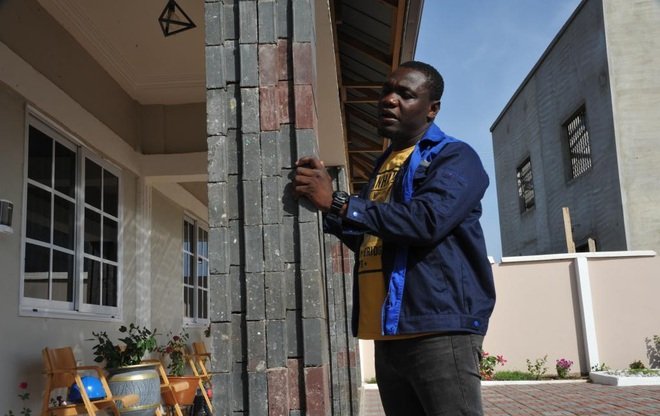
In the working-class suburb of Ashaiman, just outside Accra, plastic waste is part of the landscape. It clogs drains, fuels floods, and forms mountains in empty lots. But for Nelson Boateng, it also became the foundation of something radically hopeful.
Nelson’s relationship with plastic began early. At just 13, he took up work in a plastic manufacturing factory—a job that would unknowingly shape the rest of his life. By his twenties, he had co-founded a small company producing plastic shopping bags. Business was steady, but something felt off. The very material fueling his income was choking his community. In 2015, as conversations around Ghana’s growing plastic crisis intensified, Nelson found himself at a crossroads. The government considered banning plastics outright. But what if the solution wasn’t to eliminate plastic—what if it was to reimagine it?
That question led to the birth of Nelplast Eco Ghana. Using a locally developed process, Nelson began experimenting with mixing shredded plastic waste and sand to create building materials. It was slow work at first, done by hand, with improvised tools but the result was promising: durable paving tiles and interlocking bricks strong enough to build roads, homes, even schools. Where others saw waste, Nelson saw infrastructure.
His first major breakthrough came when he used 13,400 kilograms of plastic waste to build a home in Ashaiman—a proof of concept that drew national attention. Unlike traditional cement blocks, Nelplast’s bricks didn’t require mortar. They locked into each other, resisted cracks and moisture, and could last over 500 years. And they were cheaper around 30–40% less expensive than standard materials, making them ideal for Ghana’s urgent need for affordable housing.
But the impact wasn’t just environmental. Nelson’s factory began hiring locally, training youth in eco-construction and working with a network of over 300 waste collectors, mostly women who now earn steady income by supplying raw plastic. Every day, Nelplast recycles between 2,000 and 3,000 kilograms of plastic, with demand far outpacing their current processing capacity.
Despite this success, scaling hasn’t been easy. Equipment is limited, and Nelson estimates the company needs close to $2 million in investment to meet daily demand and expand production. Yet the mission has remained the same: to turn a single problem plastic waste—into a triple solution: jobs, homes, and cleaner cities.
Nelplast’s work has drawn support from the United Nations Development Programme and interest from several African governments looking to replicate the model. But for Nelson, it has never been about accolades. “There is an opportunity in every bad situation. We are seeing plastic as a problem, but we can turn this into a good resource to solve other problems.”
