

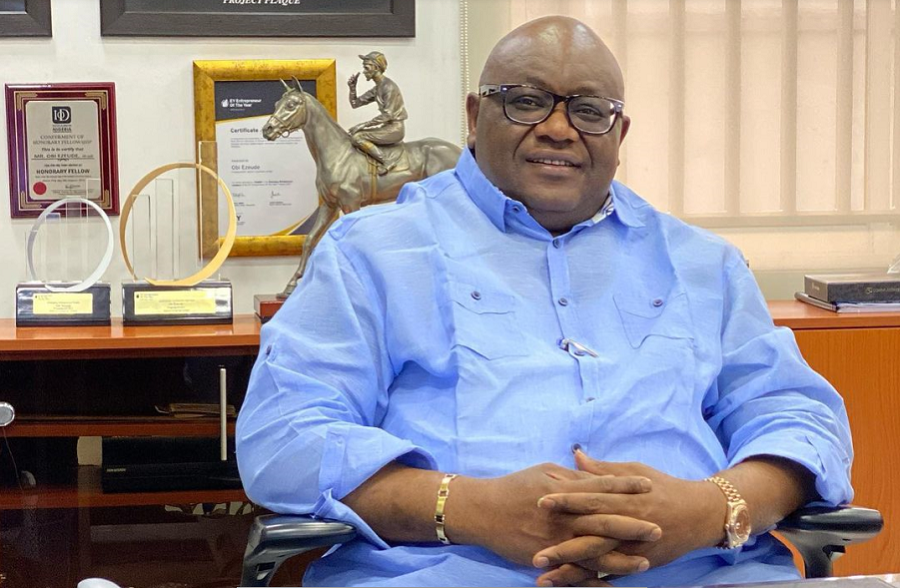
For Obi Ezeude, the story of Beloxxi Industries is not simply about biscuits, it is about the belief that Nigeria can compete on the global stage. His entrepreneurial journey began in 1994 with the founding of Beloxxi & Company Limited (BCL), an importing business bringing in premium biscuits such as Hwa Tai and Luxury Cream Crackers from Malaysia, and Dean’s Shortbread from Scotland.
A graduate of Banking and Finance, Ezeude returned to Nigeria in his twenties with a determination to be part of the solution rather than escape the country’s economic struggles. His early years were spent learning the rhythms of trade, building trust with suppliers, and studying how quality products could find loyal customers even in a competitive market. With limited capital and no foreign investors in those first days, he relied on persistence, discipline, and his ability to spot opportunities others overlooked.
When the government banned imports, Obi saw an opportunity — not a dead end
The pivotal moment came in 2003 when the Nigerian government banned the importation of biscuits. For many importers, it was the end of the road. But Ezeude saw it differently. Rather than find loopholes to continue importing, he decided to build his own factory and manufacture locally. It was a bold move at a time when Nigerian biscuit manufacturing was small-scale and often inconsistent in quality.
Turning down proposals from his Malaysian partners to channel goods indirectly through other countries, he chose to start from scratch. The breakthrough came when he secured a USD 2.2 million loan from the U.S. Export–Import Bank a remarkable feat for a young Nigerian businessman at the time. By 2006, Beloxxi Industries Ltd had its first manufacturing facility in Ikeja, Lagos, equipped with advanced machinery and built to international standards.
If demand exceeds supply, you don’t slow down — you build bigger.
Within months of launch, Beloxxi’s cream crackers won over Nigerian households. By early 2007, demand was so high the factory could not keep up. Ezeude’s answer was not to ration supply but to invest in scale. He acquired a large greenfield site in Agbara, Ogun State, installing state-of-the-art Italian machinery from Imaforni International SpA.
The first phase three production lines was commissioned by President Goodluck Jonathan in 2010. By 2018, Vice President Yemi Osinbajo inaugurated Phase Two, which doubled the lines to six. Today, a third phase is underway, adding three more lines and taking annual production capacity to 100,000 metric tonnes.Global investors saw the growth and wanted to be part of it.
In 2016, Beloxxi attracted $80 million in minority equity investment from a consortium including 8 Miles LLP (London), African Capital Alliance (Nigeria), and KfW-DEG (Germany). This capital accelerated expansion, created hundreds of jobs, and funded a packaging facility in Oregun.
For Ezeude, the investment was more than money, it was validation that world-class manufacturing could happen in Nigeria.
Recognition has followed. In 2017, Ezeude received The Sun Manufacturer of the Year Award, calling it his version of a Nobel Prize. He dedicated the honour to his employees and customers, insisting that Beloxxi’s achievements were the result of collective effort, not personal glory.
More than 80% of Beloxxi’s raw materials are sourced locally. Wheat, sugar, and packaging supplies, strengthening domestic industries and reducing Nigeria’s reliance on imports. This strategy has created ripple effects across the supply chain, with farmers, logistics companies, and packaging producers benefiting from Beloxxi’s growth.
In 2021, Beloxxi partnered with UK-based tech startup RedCloud to digitise its supply chain and distribution, aiming to process $30 million in trade over two years. This move was about more than efficiency, it was about positioning Beloxxi to serve a generation of retailers and wholesalers who increasingly operate in digital ecosystems.
“You can’t build a legacy without surviving the tough years.”
Like most Nigerian manufacturers, Beloxxi has faced high energy costs, fluctuating exchange rates, and infrastructural challenges. But Ezeude has met each obstacle with reinvestment and long-term thinking. He has resisted the temptation to cut corners, choosing instead to modernise equipment, improve working conditions, and keep the brand’s reputation intact.
“Leave it better than you met it — that’s the only way to build a legacy.”
From a modest importing business in the 1990s to one of West Africa’s largest biscuit manufacturers today, Obi Ezeude’s journey reflects vision, resilience, and unwavering faith in Nigeria’s potential. Beloxxi is now more than a household name — it is a symbol of what’s possible when local talent and global standards meet.
As the third phase of expansion takes shape, Ezeude remains focused on his ultimate goal: a Nigeria where manufacturing is not the exception, but the norm; where local factories can match the output and quality of any in the world. For him, the mission has never been about biscuits alone — it has always been about proving that Nigerians can build industries to last generations.
