

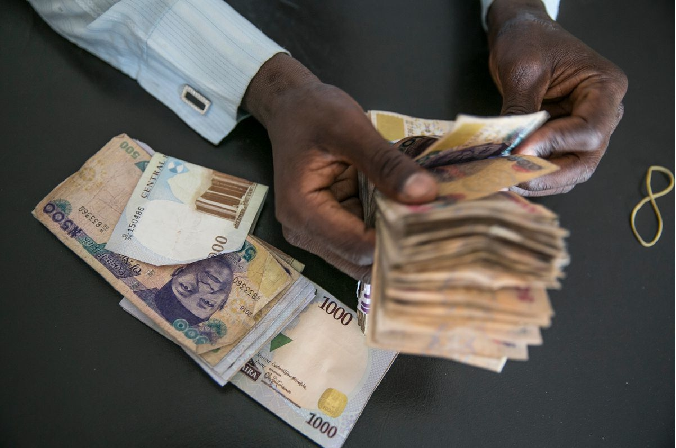
In early 2023, Nigeria’s economy experienced one of its most severe financial disruptions in decades.
The naira redesign collided with an election season and fuel scarcity, creating a perfect storm that rewired how Nigerians spend, trade, and trust money. Cash disappeared almost overnight, and queues outside banks stretched for hours. Automated Teller Machines became battlegrounds. Transfers through legacy banking apps failed as servers choked on unprecedented traffic. For millions, it was the first time in their lives that they had money in the bank but couldn’t access it. The informal economy, where most Nigerians live, trade, and survive suddenly had to adapt or collapse.
In that chaos, new winners emerged. OPay, Moniepoint, and PalmPay stood where banks faltered. They didn’t rise by accident; their structures had been built for precisely this moment, even if no one foresaw how quickly it would come. Their business models were tuned to Nigeria’s messy reality: mobile-first, agent-led, low-friction onboarding, and cloud infrastructure that could scale under heavy pressure. When the crunch came, they didn’t just provide an alternative, they became the backbone of commerce.
Traditional banks, by contrast, buckled under the weight of their own systems. Years of investment had gone into cashless infrastructure, but much of it was designed around physical branches and hybrid server environments. This model, heavy on legacy hardware, was ill-prepared for the sudden surge of millions trying to move every transaction online. Apps timed out, transfers hung for hours, and settlements failed. For the customer trying to buy a bag of rice or fuel their car, it meant humiliation at the counter. Banks had built for scale in theory, but not for volatility. The result was a spectacular collapse in trust.
OPay and PalmPay did not have to wrestle with the same constraints. Both operated fully online, lean and cloud-native. Their systems expanded almost seamlessly as traffic surged. OPay had already embedded itself into daily life with one of the largest agent networks in the country, putting green-branded kiosks and POS machines in markets, motor parks, and street corners. PalmPay, backed by Transsion, the same group behind Tecno and Infinix phones leveraged a mobile-first design that made it natural for millions of Nigerians to turn to their purple-coloured wallets. Moniepoint, though less consumer-facing, had long anchored itself in the merchant economy, giving small shop owners the terminals and business banking tools they needed to stay afloat. When cash vanished, Moniepoint’s merchants didn’t shut down; they kept transacting.
It was not just a shift in infrastructure—it was a shift in behaviour. Nigerians were suddenly transferring as little as ₦200 to buy biscuits from a street hawker. This was unheard of before the crisis, when digital transfers were reserved for larger sums. The scarcity of cash made it not only acceptable but necessary. Informal traders, from kiosks to roadside hairdressers, opened accounts because there was no other way to trade. For many, their first ever “banking” experience was not with a century-old bank but with OPay or PalmPay. In that moment, the so-called “unbanked” were onboarded en masse, not by jingles or financial literacy campaigns, but by raw necessity.
The informal economy, often ignored in boardrooms and policy papers, became the crucible of innovation. The biscuit seller who reluctantly accepted a transfer in 2023 is now used to it in 2026. The keke rider who installed a QR sticker in the middle of the crisis never removed it. This is the permanence of behavioural rewiring. Once the barriers were broken, Nigerians discovered the convenience of cashless, even for the smallest exchanges. That has not reversed, and it will not.
Reliable reports underscore just how massive the shift was. Mobile-money transactions exploded. Platforms processed ₦71.5 trillion in 2024, up from ₦46.6 trillion in 2023, with volume climbing 23% to a staggering 3.9 billion transactions KPMG reports. PalmPay alone claimed 35 million users with 15 million daily transactions in early 2025 according to dataphyte. Meanwhile, Moniepoint processed over five billion transactions in 2023, positioning itself as Nigeria’s largest merchant acquirer. Mobile money platforms processed ₦71.5 trillion in transactions in 2024, up from ₦46.6 trillion the previous year. Transaction volumes surged by 23% to nearly 4 billion. PalmPay alone claimed 35 million users and was processing 15 million daily transactions in early 2025. OPay, for its part, crossed 50 million users and a million merchants, with monthly volumes that outpaced some tier-one banks. Moniepoint processed over five billion transactions in 2023, becoming the country’s largest merchant acquirer. These are not vanity numbers; they are proof that when trust shifted, it shifted decisively.
What’s striking is how differently banks and fintechs treated distribution. Banks clung to their branch networks, still the pride of their business models, but branches were useless when there was no cash to dispense. Digital-only challengers knew that distribution in Nigeria meant agents, kiosks, and neighbourhood presence, not marble floors. By 2024, Nigeria’s POS estate had grown by nearly a million new terminals, and most of those belonged to fintech-driven networks. The kiosk became the face of finance. That street-level liquidity management, ensuring float moved in and out daily was precisely the resilience that banks failed to replicate.
This also exposed the enduring divide in how Nigeria’s economy functions. Formal banks have always courted corporates, high-value clients, and salaried workers. Fintechs, by necessity, chased the hustler class market women, transport operators, stall traders. When the cash shortage punished the whole economy, it was this second group that adapted fastest, because the rails were already there. OPay didn’t need to convince anyone with campaigns; its agents were already cashing in and out on street corners. PalmPay rode on Tecno handsets in the hands of millions. Moniepoint was already providing working capital to merchants who previously lived on cash.
The lesson here is a preparation meeting opportunity. These companies were not simply lucky. They had built for the unglamorous parts of the economy, the places where volatility is normal and shocks are part of daily survival. So when the biggest monetary shock in recent memory hit, they didn’t crumble, they expanded. And their expansion has permanently redrawn Nigeria’s financial map.
By 2026, the implications are stark. Nigerians now consider it normal to send ₦200 by transfer. Informal workers routinely settle in wallets or POS accounts. Street hawkers, once invisible to the financial system, now operate inside it, even if through the backdoor of agent banking. Banks, meanwhile, are scrambling to catch up, investing in digital revamps, cloud migrations, and agency partnerships that fintechs mastered years earlier. The informal sector, once seen as an economic blind spot, has become the biggest engine of digital finance adoption in the country.
