

Walk through Lagos on any given day and the story of African retail reveals itself in plain sight. Small kiosks selling sachet milk and bottled drinks, open-air stalls piled with yams, and market women weaving through traffic with baskets balanced on their heads. This isn’t an alternative to retail. It is retail. The International Labour Organization estimates that more than 80 percent of non-agricultural employment in sub-Saharan Africa is informal, with even higher proportions in many countries outside Southern Africa. For generations, these networks have fed families, employed millions, and circulated the bulk of consumer spending. Yet they are still labelled “informal,” as if their dominance is an aberration waiting to be corrected.
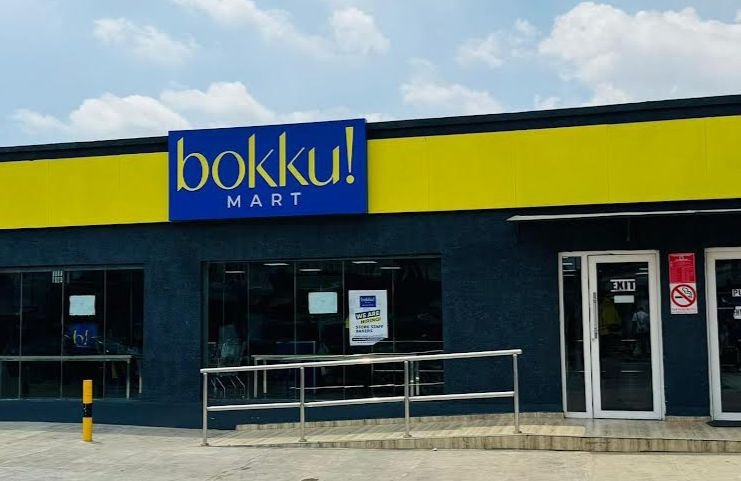
It is against this backdrop that Bokku! Mart has appeared. Launched in September 2022, and founded by Adewale Adeyemi, the Nigerian discount grocer has grown at a pace rarely seen in the country’s organised retail sector. Within 18 months it had already surpassed 70 stores, and by early 2025 it claimed more than 120 outlets across Lagos, far outstripping rivals like Addide or Shoprite on store count. Industry observers have likened its approach to the German hard-discount model pioneered by Aldi and Lidl: tightly edited product assortments, uncompromisingly low prices, and stores embedded directly in neighbourhoods rather than tethered to glitzy malls. Bokku’s own language underlines the intent, “a limited assortment of food and non-food products… our low prices make a big impact in your wallet.”
This model looks nothing like the Western supermarket ideal. Instead of sprawling aisles and destination shopping trips, Bokku has pursued the same rhythms that sustain the informal economy: proximity, frequency, and affordability. Where a South African chain like Shoprite bet on mall-based stores that required cars, weekly bulk-buying, and reliable refrigeration, Bokku opened in dense neighbourhoods where people buy food for the day or two ahead. Even before Bokku existed, Atreos Retail Platform, the parent company behind it, had signalled this direction. Back in 2017, CEO Michael Chu’di Ejekam told BusinessDay that Nigeria’s future was in neighbourhood retail formats, not mega-malls, because “low car ownership and high energy costs make large destination shopping unsustainable.” The Bokku rollout reads like the execution of that thesis.
The most telling sign that Bokku is aligning with the informal economy rather than displacing is who lines up outside its doors. On some mornings in Lagos, the queues are not only families but also traders—market women and kiosk owners who bulk-buy bread, noodles, and cooking oil at Bokku prices, then carry them back to their stalls to resell. In that sense, Bokku has become a wholesale node inside the informal system, a kind of micro cash-and-carry woven directly into the city’s fabric. traders are treating the chain as their supply house, proof that the boundaries between formal and informal are more porous than clean.
But the alignment also creates tension. If Bokku! can undercut open market prices on staples—bread loaves for under ₦1,000, noodles for ₦190 against ₦250 outside—kiosk retailers risk losing margin on the very products that keep foot traffic flowing to their stalls. The informal sector thrives on fast cash cycles and thin mark-ups; if a chain with supplier leverage consistently eats into those staples, traders are pushed into niches that may be riskier or slower-moving. In short, Bokku! strengthens consumer purchasing power, but not without compressing the margins of the same micro-retailers it overlaps with.
For Nigerians, the opportunity is clear. Amid punishing food inflation, any household saving on basics is meaningful. Knight Frank’s Lagos retail study highlighted Bokku’s ability to keep traffic steady during inflationary stress, evidence that its price-value promise resonates with consumers. Each store also generates jobs for clerks, managers, and logistics staff; with over a hundred outlets, that quickly amounts to thousands of roles in a country where youth unemployment remains stubbornly high. And for SMEs able to meet quality and volume requirements, Bokku represents a dependable channel for staples and bakery goods, offering more predictable receivables than chasing dozens of micro accounts.
This is where Bokku departs from the international playbook. Chains like Shoprite and Massmart’s Game struggled because they imported models designed for car-centric, high-income shoppers and tried to transplant them wholesale. Bokku has moved in the opposite direction: distilling global lessons in discount retail into a localised model that doesn’t ask Nigerians to abandon how they already shop. Instead, it overlays structure, supplier power, and brand recognition onto the same rhythms of proximity and frequency that the informal economy perfected long ago.
In the end, Bokku is not rewriting Africa’s retail script so much as giving the informal economy a sharper tool. It is the informal economy that has always been Africa’s supermarket; Bokku simply stamped a name on it, painted it green and yellow, and stacked the shelves in a more disciplined way.
The story of African retail has never been about the mall. It has always been about the market. Bokku Mart’s rise is proof that the future lies not in fighting that truth, but in building on it.
But the alignment also creates tension. If Bokku! can undercut open market prices on staples—bread loaves for under ₦1,000, noodles for ₦190 against ₦250 outside—kiosk retailers risk losing margin on the very products that keep foot traffic flowing to their stalls. The informal sector thrives on fast cash cycles and thin mark-ups; if a chain with supplier leverage consistently eats into those staples, traders are pushed into niches that may be riskier or slower-moving. In short, Bokku! strengthens consumer purchasing power, but not without compressing the margins of the same micro-retailers it overlaps with.
For Nigerians, the opportunity is clear. Amid punishing food inflation, any household saving on basics is meaningful. Knight Frank’s Lagos retail study highlighted Bokku’s ability to keep traffic steady during inflationary stress, evidence that its price-value promise resonates with consumers. Each store also generates jobs for clerks, managers, and logistics staff; with over a hundred outlets, that quickly amounts to thousands of roles in a country where youth unemployment remains stubbornly high. And for SMEs able to meet quality and volume requirements, Bokku represents a dependable channel for staples and bakery goods, offering more predictable receivables than chasing dozens of micro accounts.
This is where Bokku departs from the international playbook. Chains like Shoprite and Massmart’s Game struggled because they imported models designed for car-centric, high-income shoppers and tried to transplant them wholesale. Bokku has moved in the opposite direction: distilling global lessons in discount retail into a localised model that doesn’t ask Nigerians to abandon how they already shop. Instead, it overlays structure, supplier power, and brand recognition onto the same rhythms of proximity and frequency that the informal economy perfected long ago.
In the end, Bokku is not rewriting Africa’s retail script so much as giving the informal economy a sharper tool. It is the informal economy that has always been Africa’s supermarket; Bokku simply stamped a name on it, painted it green and yellow, and stacked the shelves in a more disciplined way.
The story of African retail has never been about the mall. It has always been about the market. Bokku Mart’s rise is proof that the future lies not in fighting that truth, but in building on it.
